
Dreaming of Teeth Falling Out: What Your Mind Is Really Trying to Tell You
It is one of the most unsettling dreams a person can have. You reach for your mouth and feel them loosening, one by one. But the real meaning is rarely what you expect, and once you understand it, the anxiety fades completely.
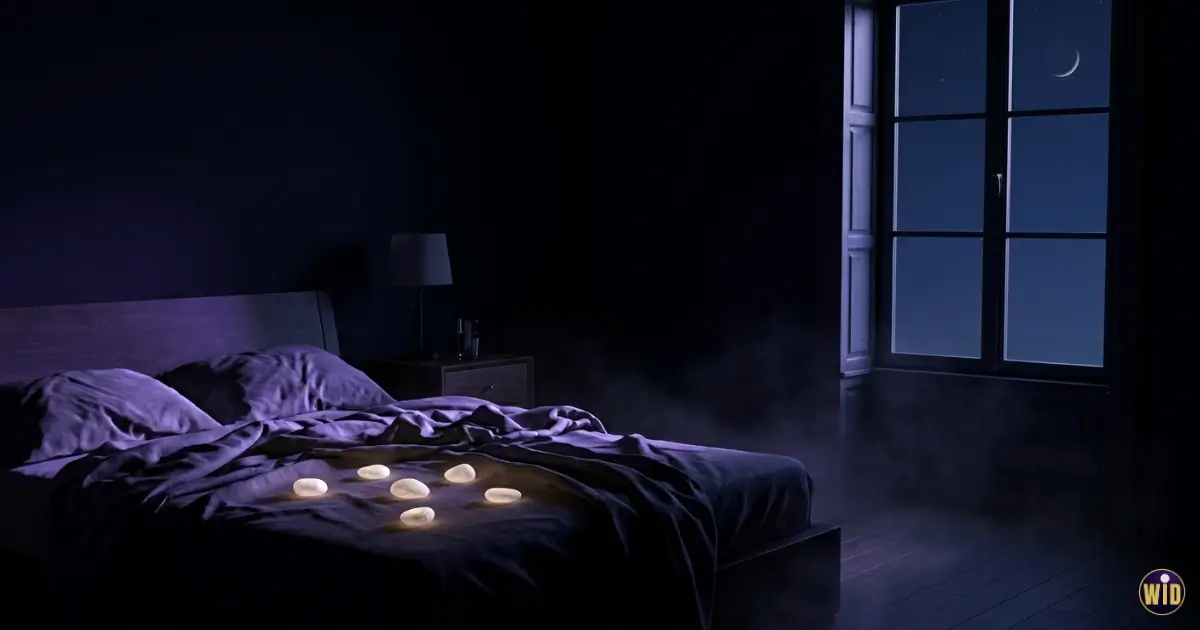
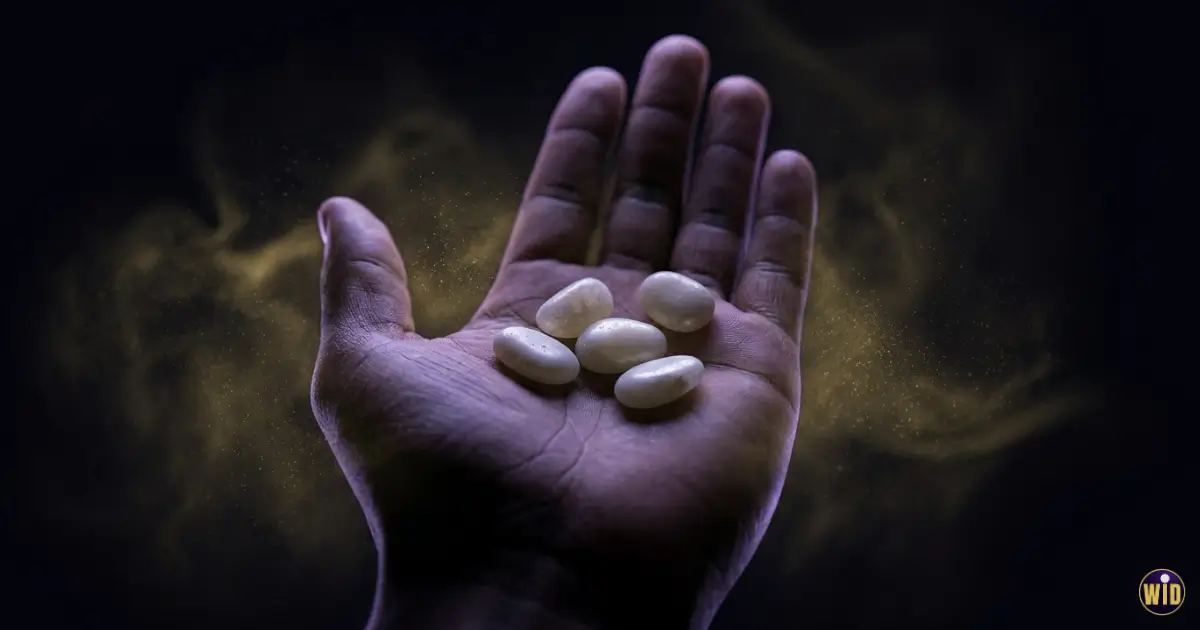
It was a Sunday morning in Chicago. Sarah woke up with a start, her hand pressed tight against her mouth. In her dream, she had felt her teeth loosen one by one, then fall into her palm, cold and smooth like small stones. She looked at herself in a mirror and her smile was full of gaps, unrecognizable. She had an important job interview the next morning, and she had not slept properly in three days.
She grabbed her phone and typed the same three words millions of people search every year: teeth falling out dream.
If you are here, you probably just had this dream too. Maybe it woke you up. Maybe it left a strange feeling that followed you into the morning. You are not alone, and you are not in danger. What this dream is pointing to is something much more personal, and much more useful, than you might think.
Most people assume this dream is about health anxiety or fear of aging. But Jungian psychology, Islamic tradition, and African symbolism all point to something else entirely, something tied to how you present yourself to the world and what happens when that image feels threatened.
5 Meanings of Dreaming About Teeth Falling Out
This is the most consistent interpretation across psychological traditions. Teeth are how we present ourselves: they appear when we speak, when we smile, when we engage with others. In dreams, losing them often reflects a fear that the image you show the world, at work, in a relationship, in your social circle, is slipping out of your control.
According to Carl Jung, teeth are closely associated with the persona, the social mask we wear in daily life. When they fall apart in a dream, the persona is being challenged. Something you have carefully built is feeling unstable.
Teeth are essential for speech. We need them to form words, to articulate clearly, to be understood. When they fall out in a dream, many analysts connect this to a fear of losing your voice, literally or figuratively.
In the Jungian tradition, to which Marie-Louise von Franz contributed as one of Jung’s closest collaborators, dreams about the mouth and teeth are often read as surfacing in periods when the dreamer feels silenced, dismissed, or unable to express something essential. Is there something you have been holding back? A conversation you have been avoiding? A truth you feel you cannot say out loud?
Across the Jungian literature, this dream almost always comes back at a moment when the person feels they have something to prove, not necessarily to others, but sometimes to themselves. That is what Jung called the anxiety of the persona: the fear that the image we have built for the world might collapse.
Think about when children lose their baby teeth. It is a natural, sometimes uncomfortable process, but it signals growth. Something old makes way for something stronger. Many analysts, including Robert Johnson, connect teeth-falling dreams to exactly this kind of threshold moment: an ending that is clearing the path for something new.
This reading is especially common during career changes, relationship endings, moves to a new city, or any major shift in identity. The dream arrives not as a warning, but as a marker: you are in transition.
Sometimes the most honest interpretation is also the simplest one. Sleep researchers have consistently found that teeth-falling dreams spike during periods of high stress, right before important events, during conflicts at work or at home, or when we are running on too little sleep.
The dream is not predicting catastrophe. It is mirroring what your nervous system is already carrying. Think of it as a pressure gauge: your body is telling you it is under more load than usual.
In Islamic dream tradition and in several African symbolic frameworks, teeth are deeply connected to the people around us. Losing them in a dream can represent a fear of losing someone close, processing an actual loss, or navigating a relationship that feels fragile.
If you have recently experienced a death, a breakup, or a significant ending in any close relationship, this dream may be your unconscious mind working through that loss in the only way it knows how: through symbol.
The detail that changes everything is often not the falling itself, but what you felt during the dream. Pain or calm, panic or acceptance, each emotional tone points to a different layer of meaning, and that emotional signature is almost always more important than the image alone.
Common Symbolic Associations
These are frequent associations, not fixed rules. Your personal feeling during the dream matters more than any general correspondence.
| Dream detail | Common association | Worth exploring if… |
|---|---|---|
| Teeth fall slowly, one by one | Gradual loss of confidence or control | A long-running situation is quietly wearing you down |
| All teeth fall at once | Sudden life disruption or identity shift | A major change has happened or is about to happen |
| Teeth fall with no pain | Natural transition, letting go | Something is ending that you may already be at peace with |
| Teeth fall with blood | Loss involving someone close | A relationship or family situation is weighing on you |
| Teeth crumble rather than fall | Something that was solid is eroding slowly | A plan, a belief, or a relationship is losing its foundation |
| You try to hold the teeth in | Resistance to change, fear of letting go | You are holding onto something that may need to be released |
| You feel calm during the dream | Acceptance of transition | Your unconscious is already making peace with something |
Islamic Interpretation: What Ibn Sirin Says
Ibn Sirin, the eighth-century Islamic scholar and the primary authority on dream interpretation in Islamic tradition, dedicated extensive attention to teeth dreams. His readings are consistent with the idea that teeth represent the people closest to us, and that the manner in which they fall shapes the meaning significantly.
| Situation in the dream | Ibn Sirin’s interpretation |
|---|---|
| Upper teeth fall out | May refer to male relatives or the dreamer’s paternal side |
| Lower teeth fall out | May refer to female relatives or the maternal side |
| Teeth fall without pain or blood | A departure or separation that does not carry harm |
| Teeth fall with blood | A more significant loss involving the family circle |
| You hold your fallen teeth in your hand | Something of value is being preserved despite the difficulty |
| Teeth fall and you lose them | A relationship or connection that is difficult to recover |
| New teeth grow back after falling | Renewal after difficulty, a positive sign of recovery |
| A single tooth falls | May refer to one specific person in the dreamer’s life |
African Symbolism and Traditions
Across several West African traditions, the mouth and teeth carry significant symbolic weight, connected to speech, lineage, and spiritual authority.
Among the Yoruba of Nigeria, the mouth is considered a sacred space where words carry the power of action. Dreams about losing teeth can be interpreted as a warning to speak carefully, or as a sign that words spoken recently have had unintended consequences. The Yoruba tradition places great emphasis on the relationship between speech and spiritual wellbeing.
Among the Akan people of Ghana and Ivory Coast, teeth dreams are sometimes connected to the concept of sunsum, the individual spirit, and can reflect a sense that one’s personal power or social standing is being tested. Akan elders often interpret these dreams in the context of the dreamer’s relationships within the community, rather than as isolated personal experiences.
The Question That Unlocks Everything
Before looking for a symbolic meaning, ask yourself one thing: in the days before this dream, was there a situation where you felt you had to prove something, or where you feared how others were seeing you?
That single question will usually tell you more than any dream dictionary. The teeth dream is rarely about teeth. It is about the gap between who you are and the version of yourself you are trying to show the world. And it surfaces precisely when that gap feels widest.
Sarah, the woman from Chicago who woke up at dawn with her hand on her mouth, went to that job interview the next day. She got the position. Looking back, she said the dream had not been a bad sign at all. It had been her mind’s way of acknowledging how much that moment mattered to her.
Dream Journal: Three Questions to Sit With
Write your answers right after waking, before the dream fades.
- What was the emotional tone of the dream? Were you panicked, calm, resigned, or something else?
- Who or what came to mind immediately after waking? That first association is often the most honest one.
- What situation in your waking life right now feels most connected to the image of losing something solid?
Re-read your answers in one week. The meaning often becomes clearer with a little distance.
“This dream is one of the rare ones that almost every spiritual tradition has felt compelled to interpret. When teeth fall in your sleep, something in you is seeking to be heard far beyond the rational mind.”
Full Summary
- Loss of control over your image: the persona is being challenged, often tied to how others perceive you.
- Fear of not being heard: something you have been holding back is asking to be expressed.
- A major life transition: something old is ending to make room for something stronger.
- Unprocessed stress or anxiety: the dream mirrors what your nervous system is already carrying.
- Grief or fear of loss: a relationship or person in your circle may be at the center of this dream.
- Islamic reading (Ibn Sirin): teeth represent people close to you. The manner of falling shapes the meaning.
- African traditions: Yoruba and Akan perspectives connect teeth to speech, lineage, and community standing.
- The key question: in the days before, did you feel you had something to prove, or feared how you were being seen?