
Dreaming of Water: What the Level Is Really Telling You
Clear or murky, still or rising, water is the most emotionally accurate symbol the sleeping mind has. It does not announce what is coming. It shows you what is already here, and how high it has reached.
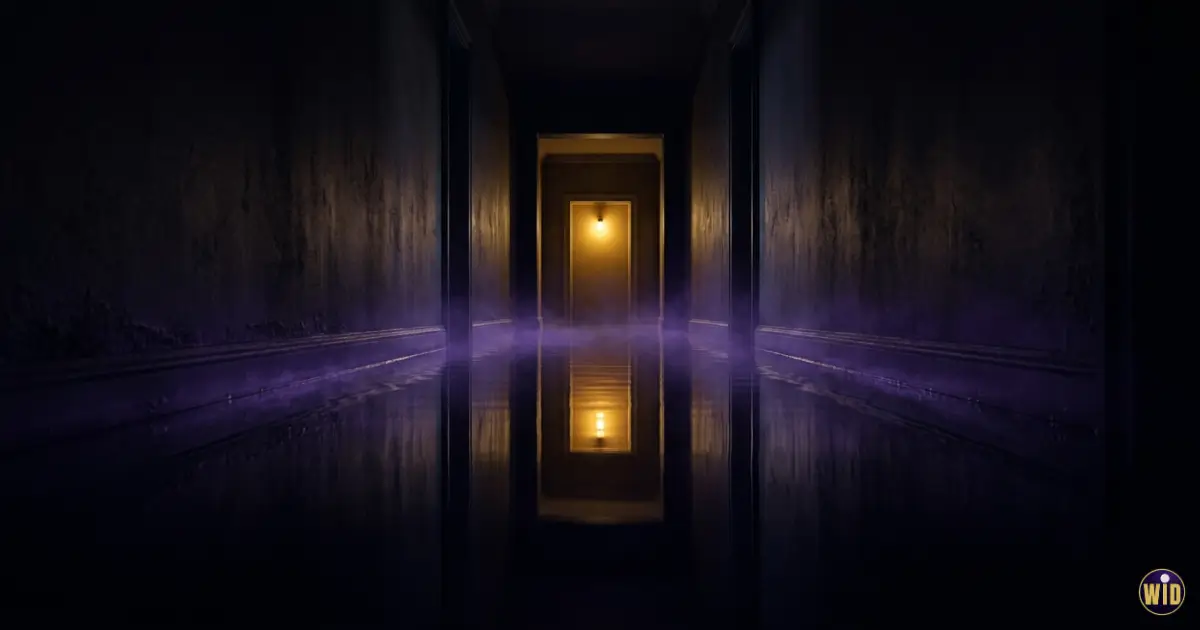
It was a Tuesday night in Portland. Renee woke at four in the morning convinced she could hear running water. In the dream, water had been rising in the hallway of her house, calm, no waves, no sound at all, and she had stood there watching the level climb without moving. She was not afraid. That is what unsettled her once she was awake. She felt she should have been afraid.
She checked the bathroom, checked under the sink, found nothing, and sat on the edge of her bed for twenty minutes trying to work out why a flooding house had felt so ordinary.
That absence of panic is not a detail to skip past. In every tradition that reads water seriously, how you felt while the water rose matters more than the water itself. The same rising hallway means one thing to a dreamer who screams and something quite different to a dreamer who simply watches.
Most people search this dream expecting a forecast. Water is read as a warning about what is coming. But across Jungian psychology, the tradition of Ibn Sirin, and West African symbolic thought, water is almost never about the future. It is a reading of the present, taken at the exact depth you are standing in.
5 Meanings of Dreaming About Water
Water is the oldest image the mind has for feeling. It has volume, it has depth, it has a surface you can see and a mass underneath that you cannot. When water appears in a dream, the first question worth asking is not what it predicts but what its condition mirrors.
Clear and still water tends to accompany periods of emotional clarity, even when waking life looks complicated on the surface. Murky, dark or churning water tends to accompany the opposite, a feeling you can sense the weight of without being able to name it. The dream is not inventing that feeling. It is giving it a shape you can finally look at.
From what I see in dreamers, the people who dream of water are almost never living through a crisis. They are living through an accumulation. Water does not burst into a dream, it rises, and that slowness is what gives the dream away.
A fire dream is sudden. A falling dream is sudden. Water is the exception: it arrives by degrees. Rain becomes a puddle, a puddle becomes a flood, and the dreamer is usually somewhere in the middle of that sequence rather than at its dramatic end.
This is why water dreams so often show up during long stretches rather than after single events. A job that has been draining for eight months. A relationship that has been quietly unequal for two years. Nothing broke. Something filled up.
The detail almost everyone forgets to report is their own position. Were you in the water, on it, beside it, or watching it from a window? That single fact changes the reading more than the colour, the depth, or the setting ever could.
Carl Jung treated water as the most direct symbol available for the unconscious itself. Not a metaphor for one particular feeling, but an image of the whole region of the psyche that operates below awareness. A lake, a sea, a river: each is a surface with something underneath it.
In that reading, descending into water, diving, or seeing something move beneath the surface is not a threat. It is contact. Marie-Louise von Franz, who worked closely with Jung, described such images as moments when material that had been developing quietly finally becomes available to the conscious mind.
Water washes. Almost every culture that has ever formalised a beginning has used water to mark it, and the sleeping mind borrows that association freely. Rain, a shower, swimming in a clean sea, wading into a river: these images cluster around periods when something is being set down rather than picked up.
Robert Johnson wrote about symbols of immersion as markers of transition, moments when an old arrangement is dissolved before a new one has formed. The dreamer is not being cleansed of anything shameful. They are being separated from a version of their life that has already ended in practice.
Then there is the reading nobody needs help finding. Floods, tidal waves, water coming under a door, water you try to bail out and cannot. These dreams speak plainly. They point to a situation whose scale exceeds what you can manage by effort alone.
What is worth noticing is the response inside the dream. Dreamers who fight the water and dreamers who let it rise are usually facing different things in waking life. The first tends to be resisting an outcome. The second has often already accepted it and has not yet admitted so to anyone, including themselves.
Renee was not afraid because the water in her hallway was not new to her. It had been there for months. The dream simply showed her the level.
Common Symbolic Associations
These are frequent associations, not fixed rules. What you felt during the dream matters more than any general correspondence.
| Dream detail | Common association | Worth exploring if… |
|---|---|---|
| Clear, still water | Emotional clarity, settled inner state | Something you were unsure about has quietly resolved |
| Murky or dark water | A feeling present but not yet named | You have been uneasy without being able to say why |
| Water rising slowly | Accumulation over time rather than sudden change | Something has been building for months and you kept managing it |
| Flood or tidal wave | A situation larger than your capacity to control it | Effort alone is no longer changing the outcome |
| Swimming with ease | Confidence in navigating an emotional situation | You are handling something difficult better than you admit |
| Drowning or struggling | Overwhelm, often connected to responsibility | You are carrying more than you have told anyone |
| Watching water from a window | Emotional distance, observing rather than feeling | You have been describing your situation instead of living it |
| Rain | Release, the end of a dry or difficult stretch | Something long and heavy has recently loosened |
Islamic Interpretation: What Ibn Sirin Says
Ibn Sirin gave water unusually detailed attention, treating it as one of the symbols whose meaning shifts most sharply with its condition. In his framework the state of the water, its clarity, its movement and its behaviour toward the dreamer, carries more weight than the setting in which it appears.
| Situation in the dream | Ibn Sirin’s interpretation |
|---|---|
| Drinking clear, fresh water | Provision, knowledge, relief from a present concern |
| Dark, foul or bitter water | Difficulty in one’s affairs, a matter that has become troubled |
| Walking on water without sinking | Strength of conviction, an undertaking carried through successfully |
| A flood entering a place | A significant trial, or a powerful opponent affecting the household |
| Water that recedes without harm | A difficulty that passes through without lasting damage |
| Deep water of unknown depth | A matter whose outcome is not yet determined |
| Rain falling gently | Mercy and relief, generally a favourable sign |
| Carrying water without spilling it | Responsibility handled well, trust honoured |
African Symbolism and Traditions
In much of West Africa, water is not an emotional metaphor at all. It is a place where beings live, where lineages begin, and where the visible and invisible worlds touch. A dream of water is therefore treated less as a feeling to decode than as a location the dreamer has visited.
Among the Dogon of Mali, the Nommo are ancestral water beings central to the cosmological account of how order came into the world. Water in this tradition is bound to origin, to speech and to the maintenance of balance. A dream in which water appears clean and undisturbed may be read as a sign that the dreamer stands in a settled relationship with what came before them.
Among the Yoruba of Nigeria, rivers carry named identities. Osun is associated with fresh water, fertility and healing, while Yemoja is linked to larger bodies of water and to motherhood. A dream set beside or within water can be understood as an encounter rather than a symbol, and Yoruba practice often treats such dreams as worth discussing with an elder rather than interpreting alone.
The Question That Unlocks Everything
Before assigning a meaning, ask yourself one thing: where were you in relation to the water, and did you try to change what it was doing? Position and response together will tell you more than the water ever will on its own.
A dreamer standing in a rising hallway is not in the same situation as a dreamer swimming out of one, and neither is in the same situation as a dreamer watching through glass. The water is identical in all three. The relationship is not.
Renee, the woman in Portland who woke at four in the morning listening for a leak, realised something a few weeks later while describing the dream to a friend. She had said the water was rising and that she had watched it. Her friend asked why she had not moved. She did not have an answer, and that missing answer turned out to be the whole thing.
Dream Journal: Three Questions to Sit With
Write your answers right after waking, before the dream fades.
- Describe the water in exactly three words. Do not explain them, just write them down.
- Where were you? In it, on it, beside it, or watching from somewhere dry?
- Did you try to stop it, escape it, or let it happen? Your response in the dream usually mirrors a response you are already making in waking life.
Re-read your answers in one week. Meaning tends to sharpen with a little distance.
“Water never announces what is coming. It shows what is already there, and how high it has reached on you.”
Full Summary
- An unnamed emotion: the condition of the water describes a feeling you can sense but have not yet put into words.
- Accumulation, not crisis: water rises by degrees, which is why these dreams track long stretches rather than single events.
- The unconscious itself: in Jungian terms, a surface with something beneath it is the plainest available image of the psyche.
- Cleansing and renewal: immersion and rain cluster around endings that have already happened in practice.
- Something you cannot hold back: floods point to a scale beyond personal effort, and your response inside the dream matters.
- Islamic reading (Ibn Sirin): clarity outweighs quantity. Clear water is favourable, dark water troubled, a receding flood harmless.
- African traditions: Dogon and Yoruba perspectives treat water as a place and an encounter rather than a metaphor.
- The key question: your position and your response. Standing in it, swimming out of it and watching it through glass are three different situations with identical water.